
More and more academic journals have been turning down papers written using AI tools, and professors have noticed that students submit essays that were rewritten by algorithms. At the same time, tools that claim to "humanize" AI text have appeared everywhere. They promise that your text will read like a human wrote it and will get past any detector.
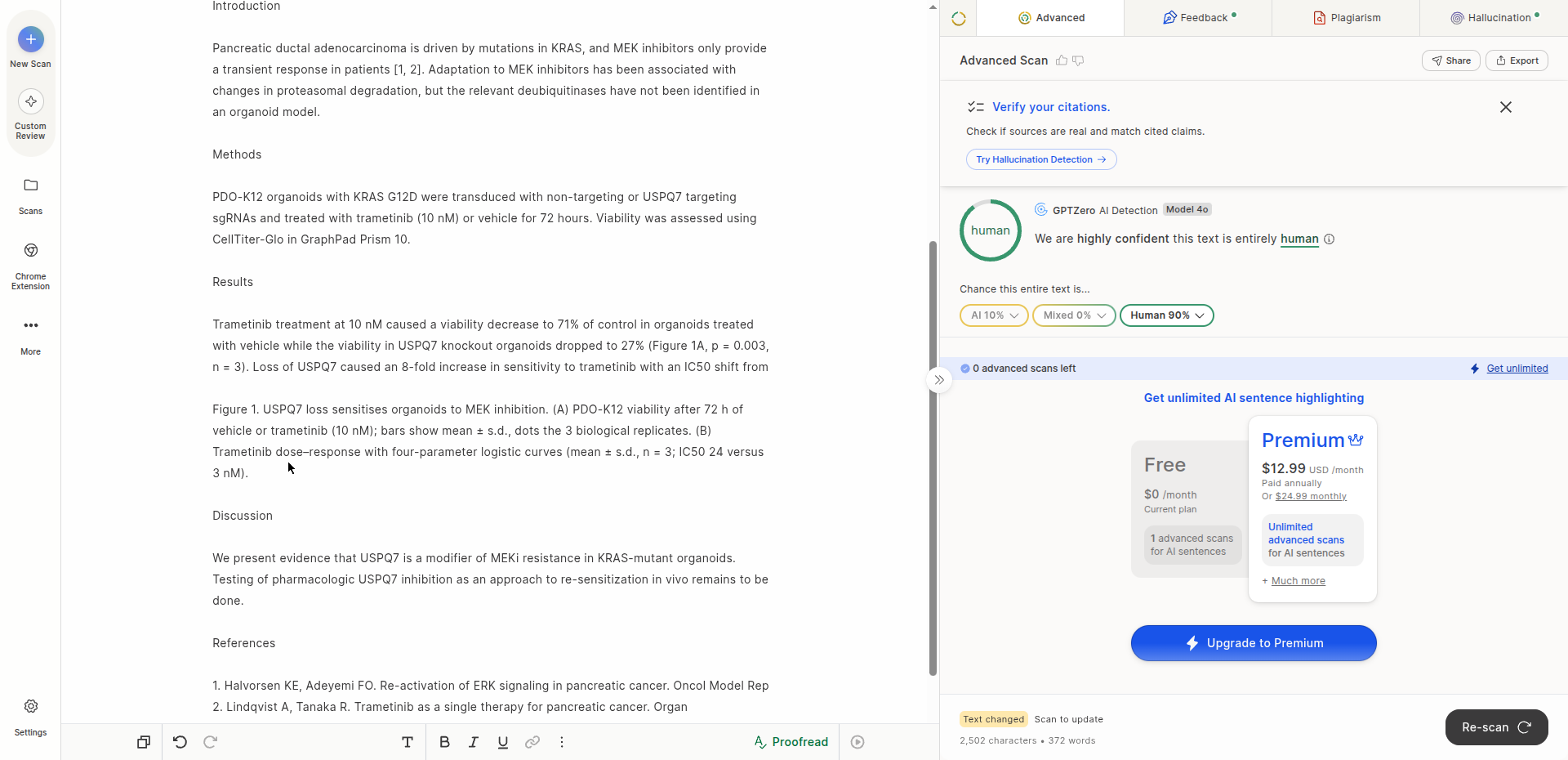
That is what the proponents of humanizing AI argue. The test involves applying these humanizers to one common assignment or essay and then evaluating how their outputs fare against an AI detector. We tested four tools against the same academic manuscript.
How the test worked
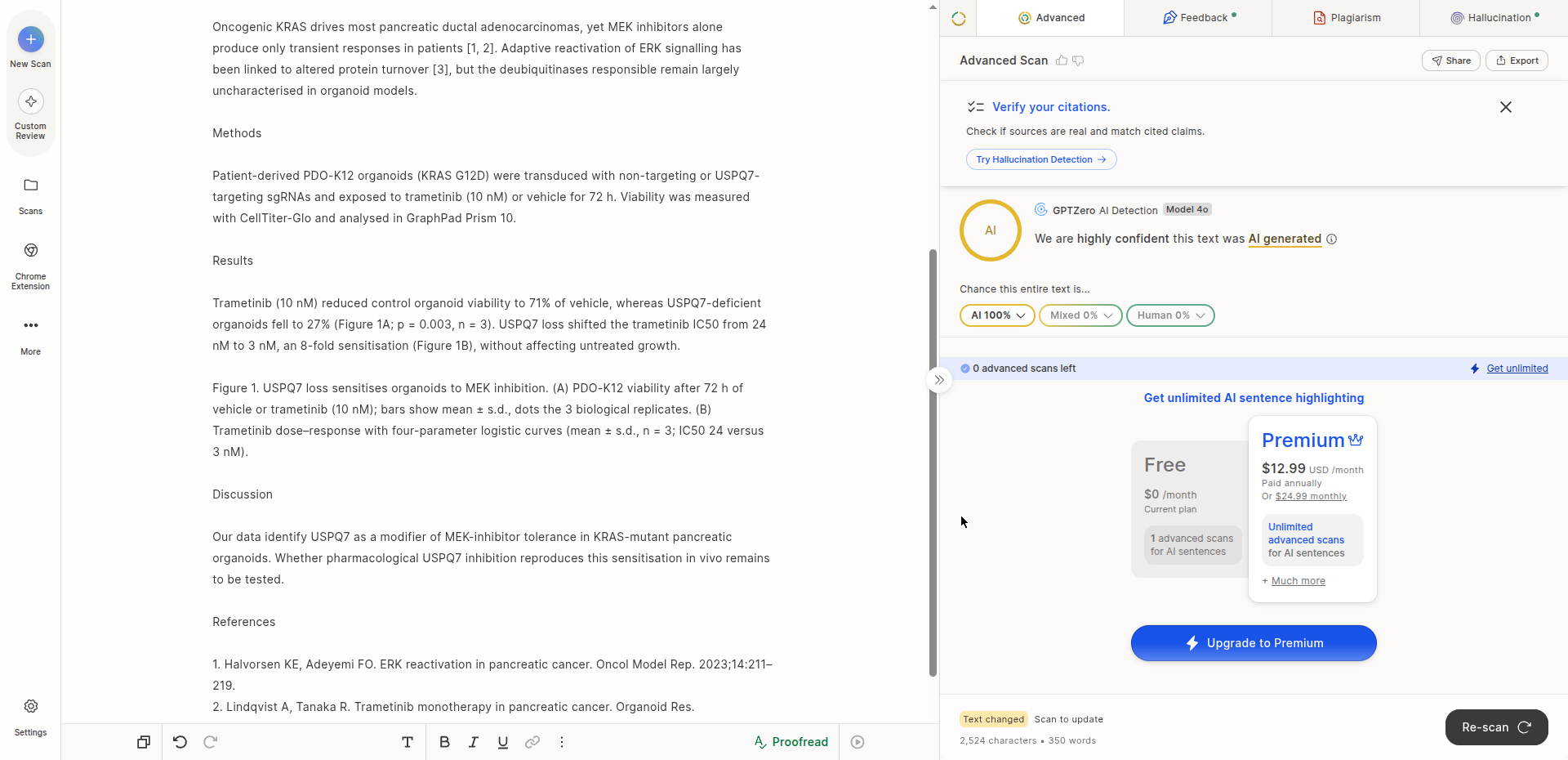
- Standardized Input: A fictional 350-word manuscript about pancreatic cancer research targeting the USPQ7/KRAS organoid pathway. GPTZero identified the unedited input as 100% AI-generated.
- Free Tier Access: Evaluated strictly using the free access plan provided by each tool with no paid upgrades or accounts required.
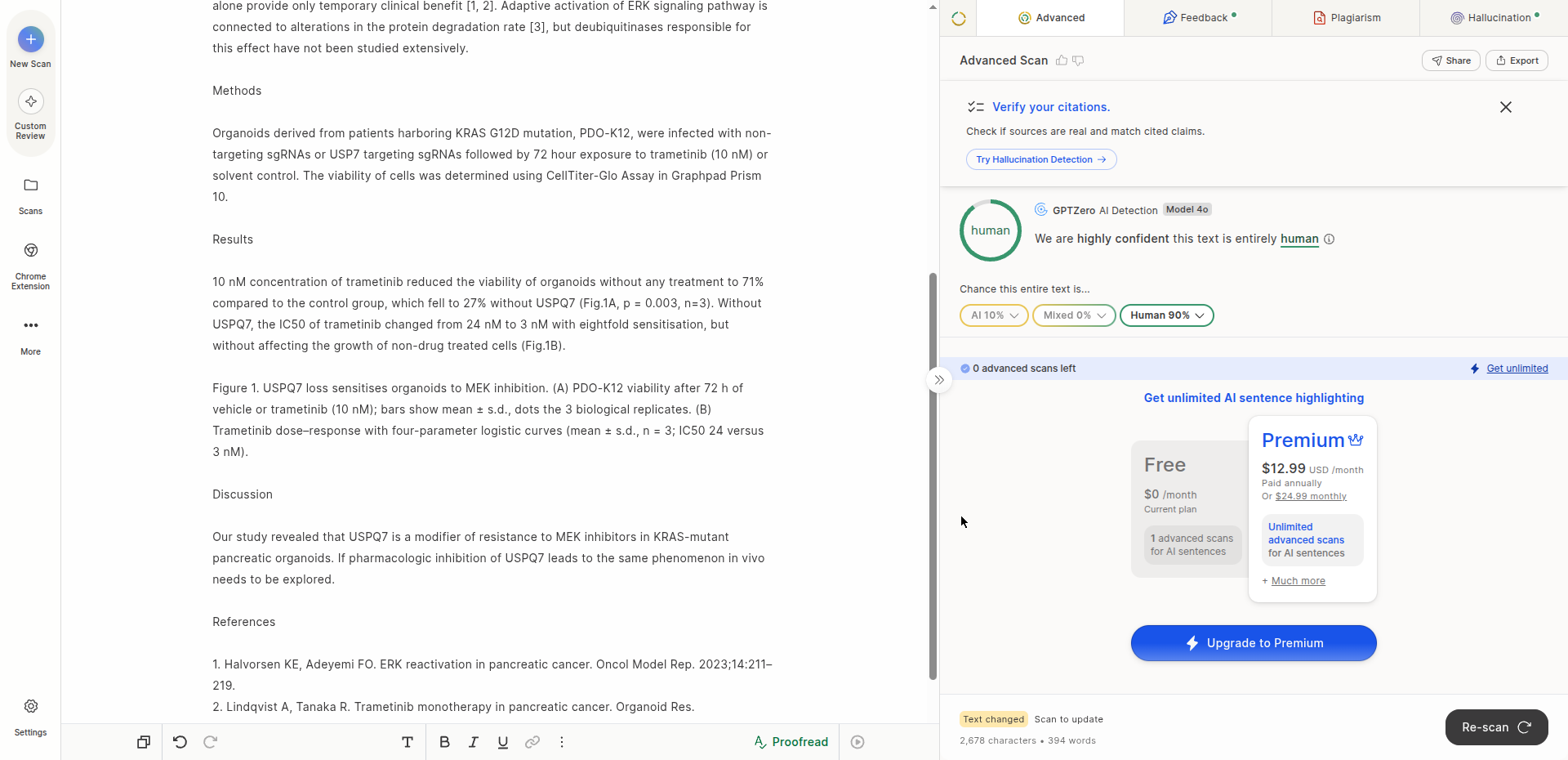
- GPTZero Detection: Each humanized output was submitted to GPTZero to measure the remaining AI probability score.
- Holistic Criteria: Comparison covered formatting retention (.docx vs text), processing speed, pricing models, and factual integrity.
Results at a glance
All four products successfully reduced the GPTZero AI score to between 7% and 11%, effectively passing the detection threshold. Because the detector scores were virtually tied, the true differentiators lie in document formatting, citation retention, and factual accuracy.
| Tool | GPTZero AI Score | Output Format | Speed (Observed) | Free Tier | Cheapest Paid Plan |
|---|---|---|---|---|---|
| HumanDoc humandoc.app |
10% AI (Human) | .docx in → clean .docx + tracked-changes .docx + meaning-check report; formatting 100% preserved | 10 s | 1,000 words/day, no sign-up | $5 / 10,000 words (prepaid, never expires) |
| BypassDoc.pro | 10% AI (Human) | .docx in → .docx out; formatting preserved | 40 s | 1,500 words/month (300 words/request), no sign-up | $4.99/mo billed annually ($9.99/mo monthly) |
| aihumanize.io | 11% AI (Human) | Text only — formatting flattened on import | 60 s | 200 words/request, no sign-up | $6/mo billed annually ($15/mo monthly, 20k words/mo) |
| ParaphraseText.ai | 7% AI (Human) | Text only | 19 s | 500 words/rewrite | $18/mo billed annually ($23/mo monthly, 40k words/mo) |
Head-to-head: what you get back
When preparing a manuscript or research thesis, the choice of output format determines whether the tool accelerates or derails your workflow. While HumanDoc and BypassDoc.pro generate a formatted Word .docx document, the other competitors return raw plain text in a browser box. Below, the outputs are compared via tracked changes against the original manuscript.
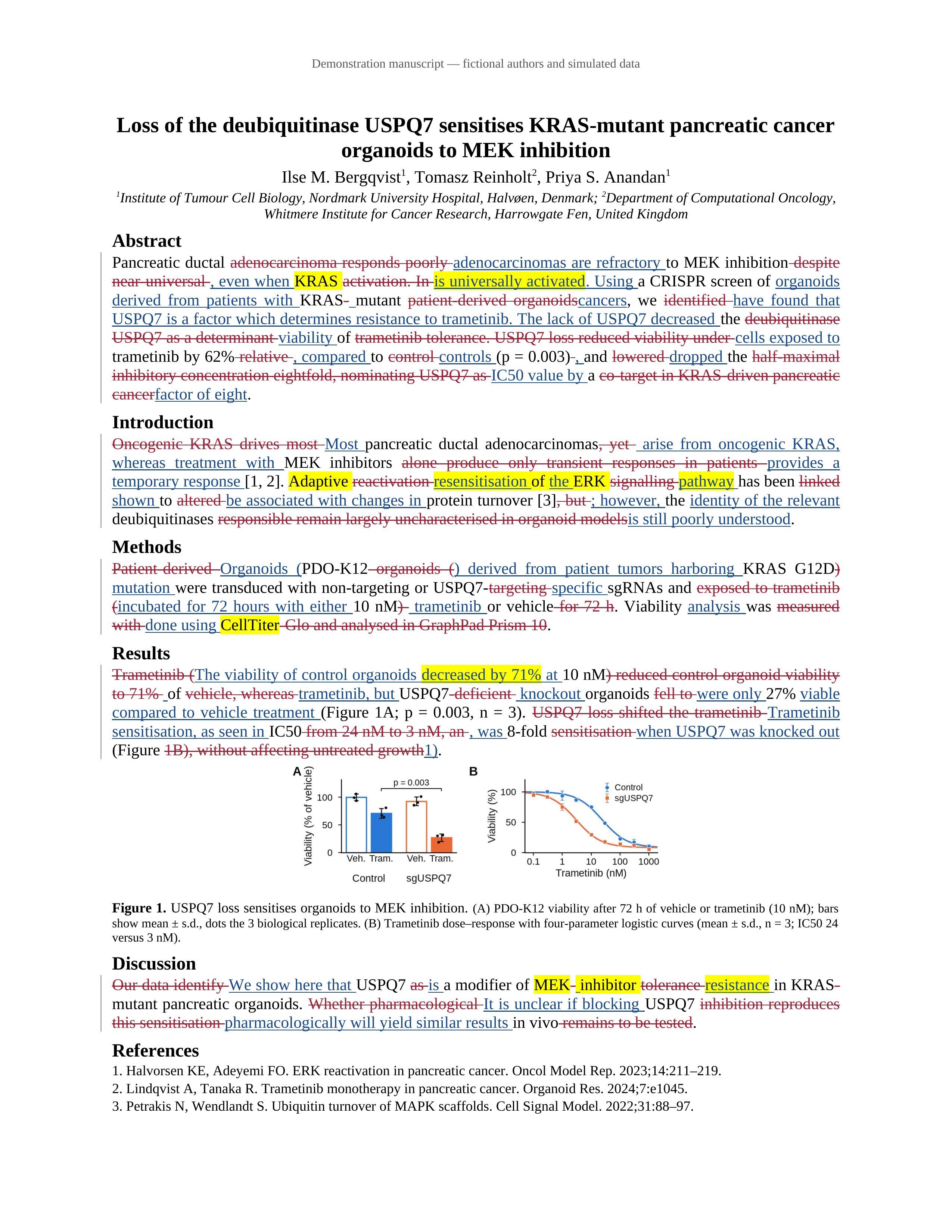
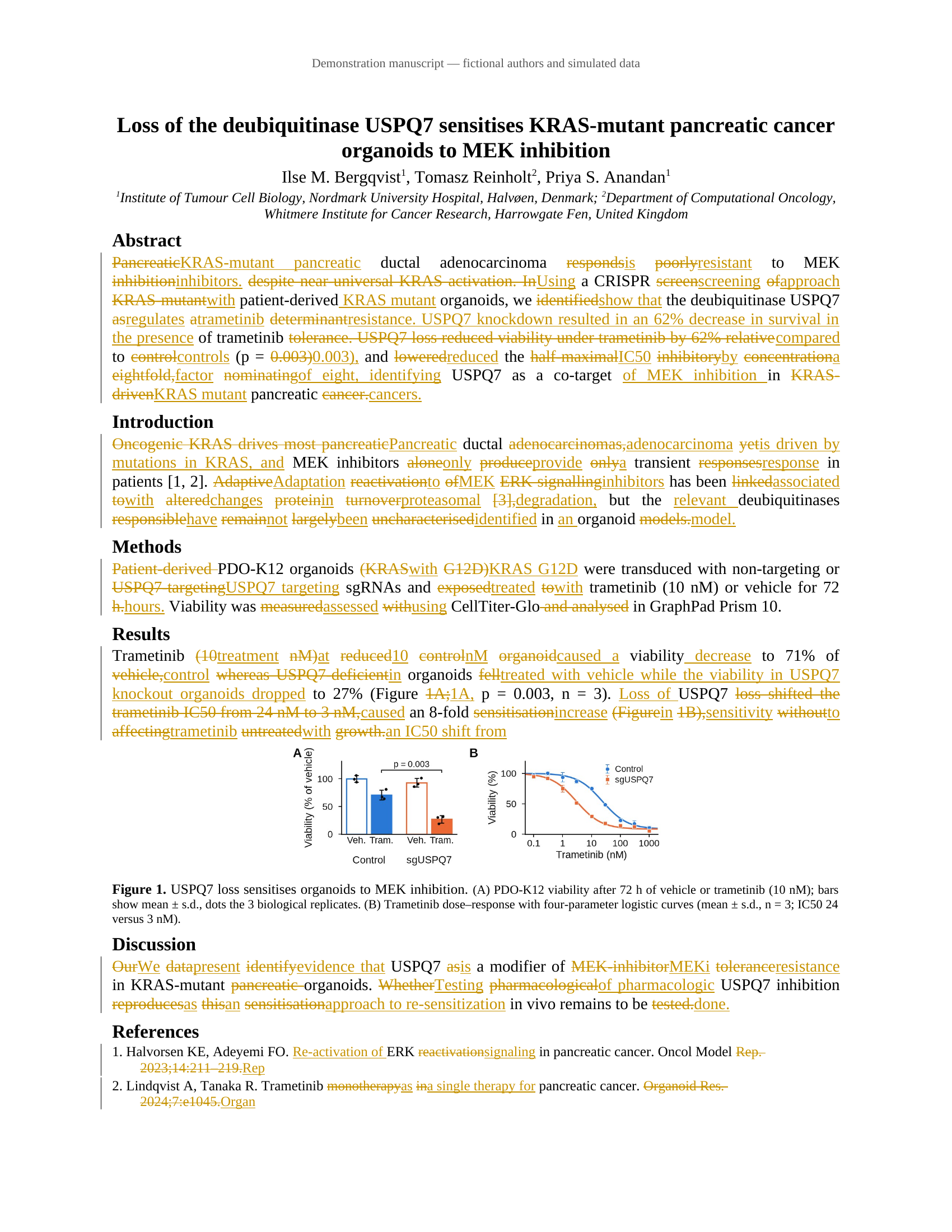
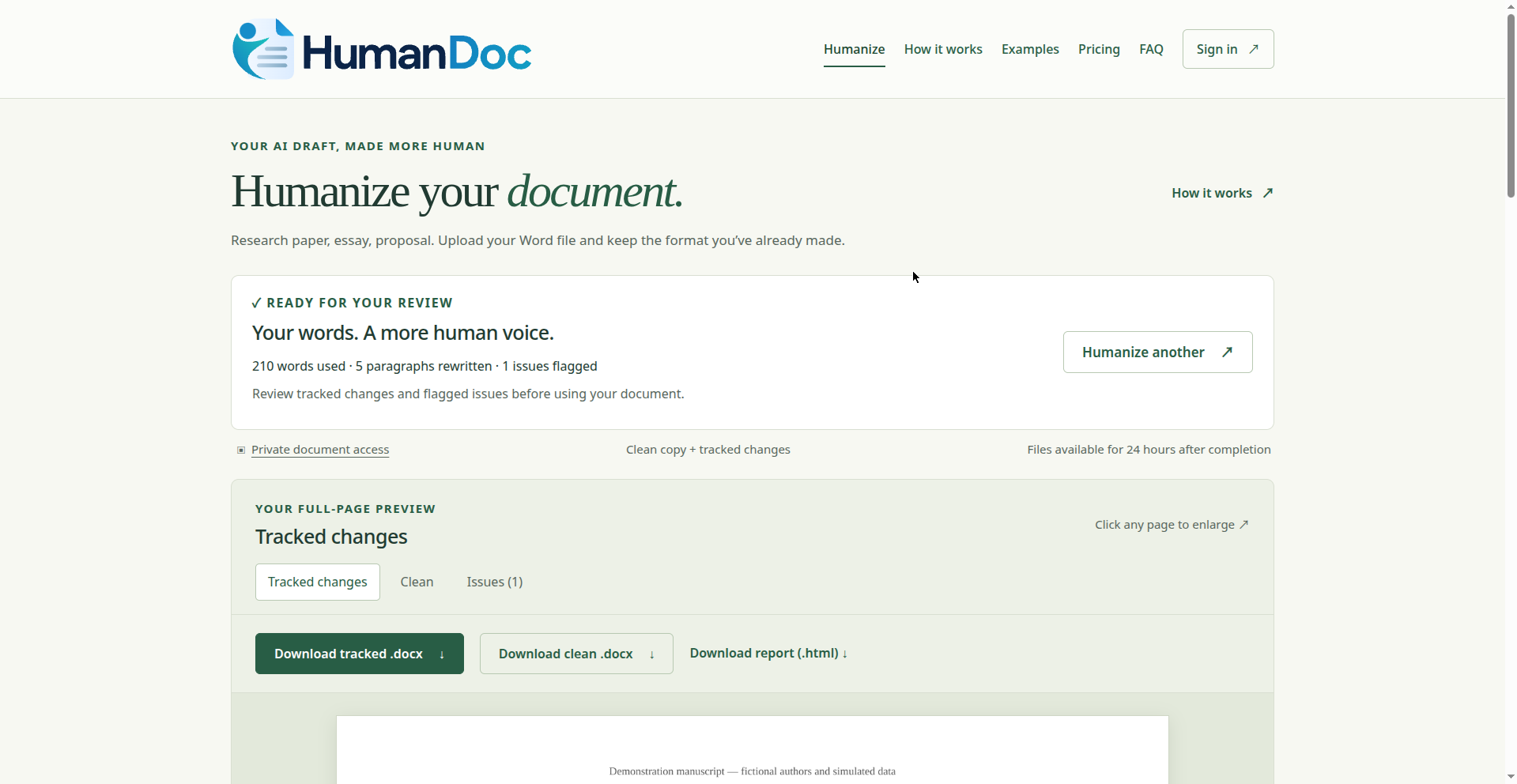
Key Insight: The HumanDoc engine preserves complete document structure, styles, tables, and references while generating a Word-compatible tracked changes revision file. Furthermore, the automated meaning-check report flags any altered scientific facts in yellow. By contrast, competitor tools either truncate content mid-sentence or discard Word document formatting entirely.
Tool-by-tool notes
1. HumanDoc (humandoc.app) — GPTZero 10% AI
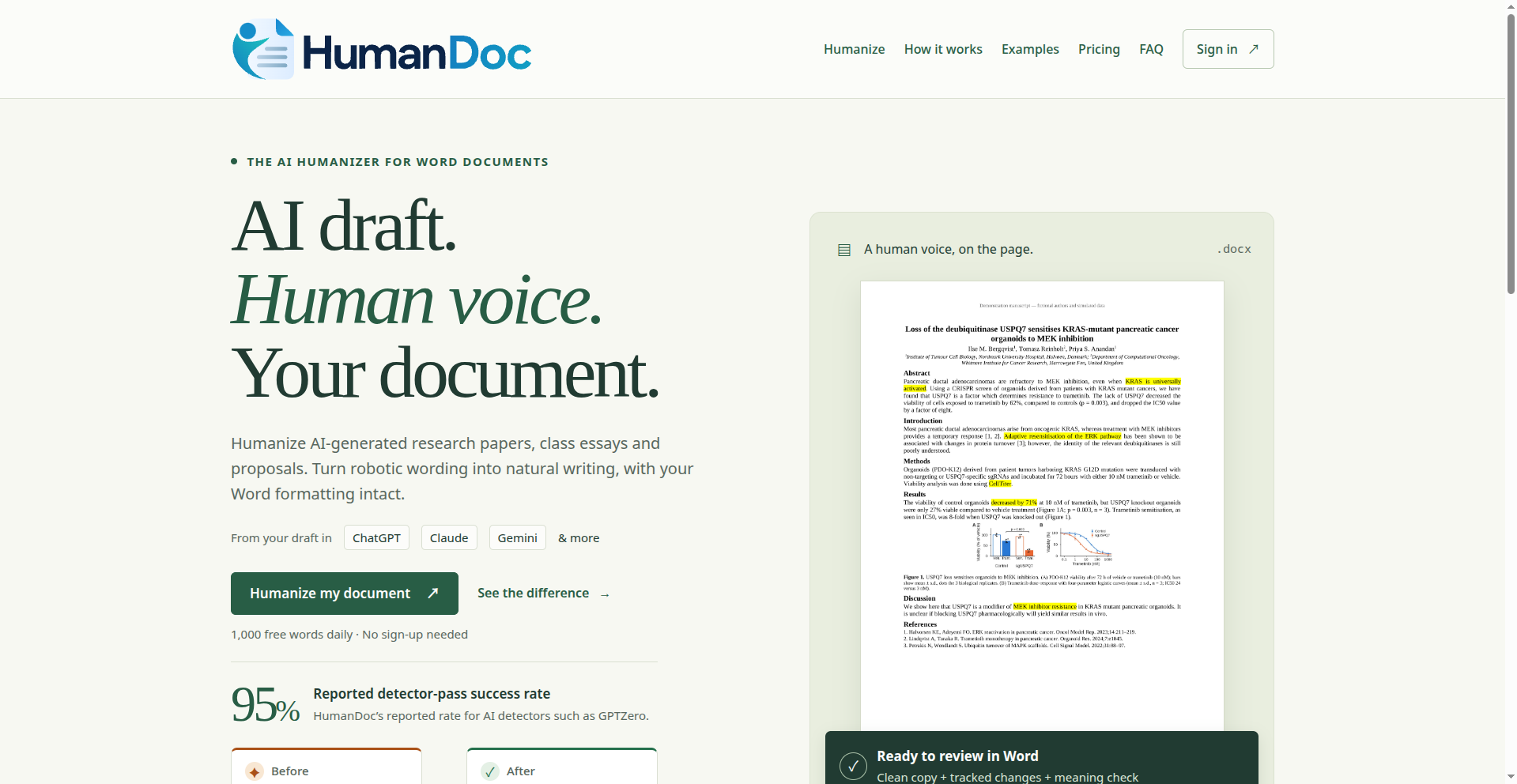
Upload a Word document (.docx) to receive three coordinated deliverables: a clean humanized .docx, a full Word tracked-changes .docx, and an interactive semantic analysis report. Headings, citations, tables, and figure legends are automatically shielded, while body prose is rewritten in 8–10 seconds without mandatory registration.
2. BypassDoc.pro — GPTZero 10% AI
This alternative service also provides a formatted .docx download. Processing took approximately 40 seconds, rewriting 251 out of 282 words. However, as demonstrated in the tracked-changes analysis, formatting retention came at the cost of silent content omission: sections terminated mid-sentence and bibliography entries were cut short.
3. aihumanize.io — GPTZero 11% AI
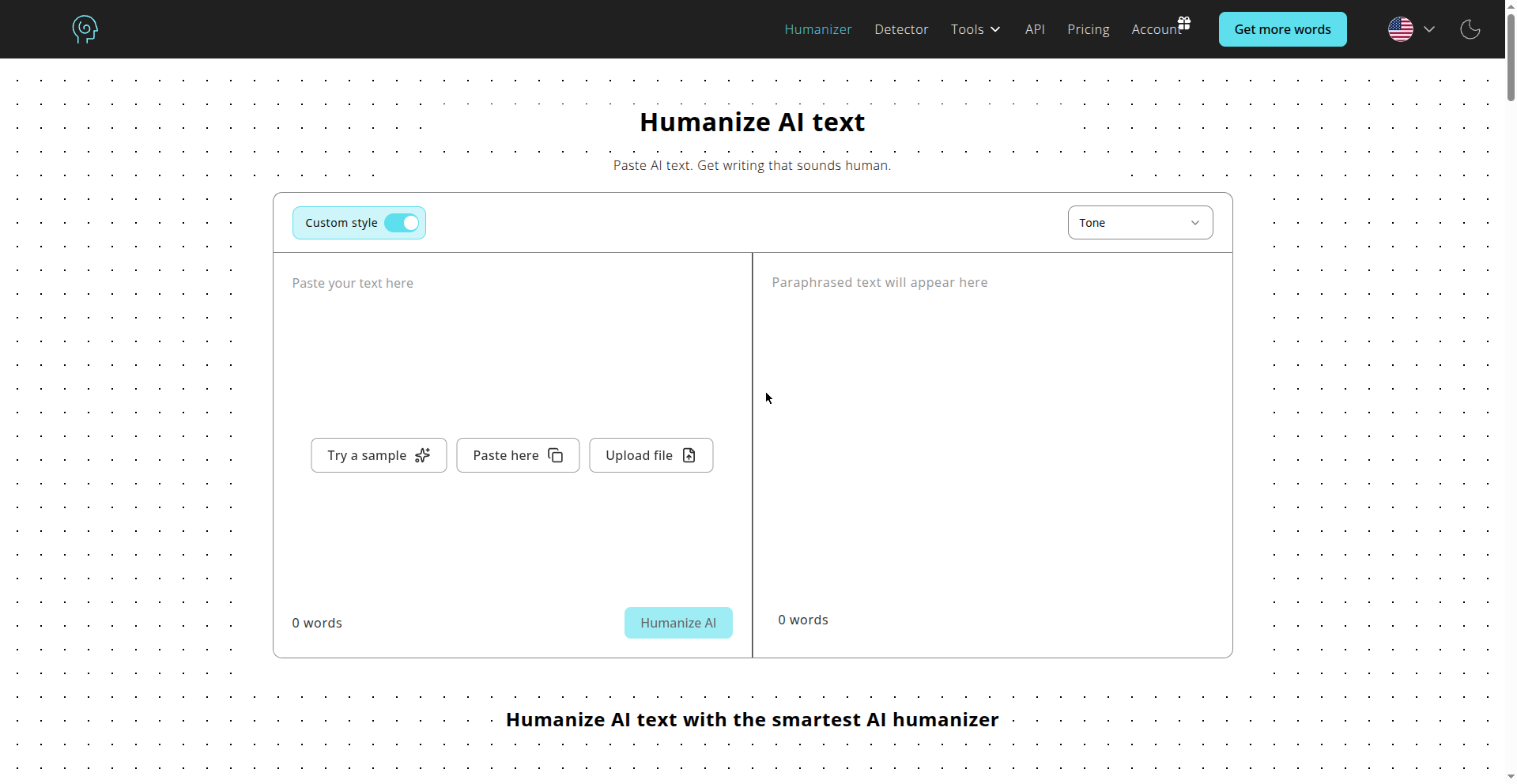
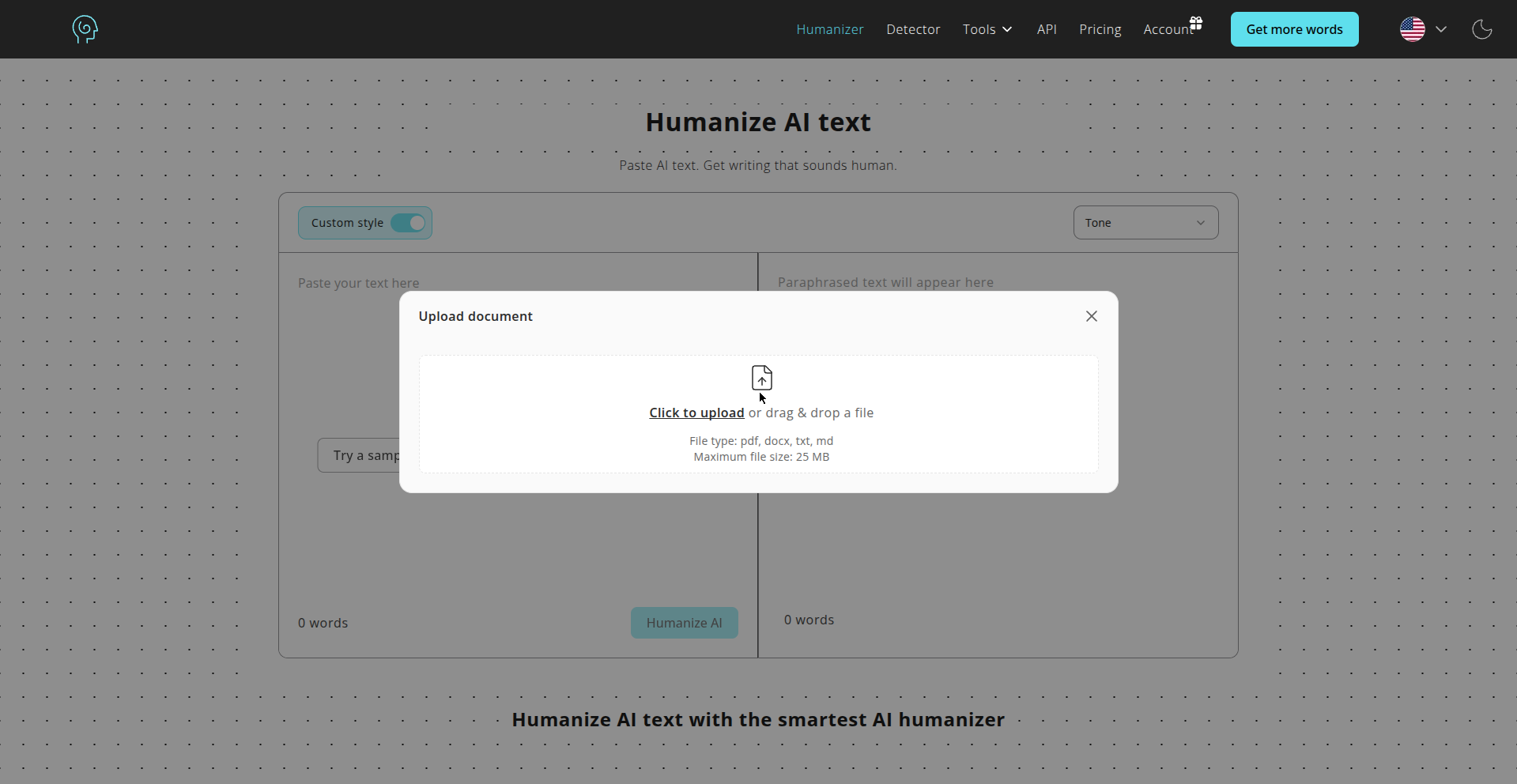
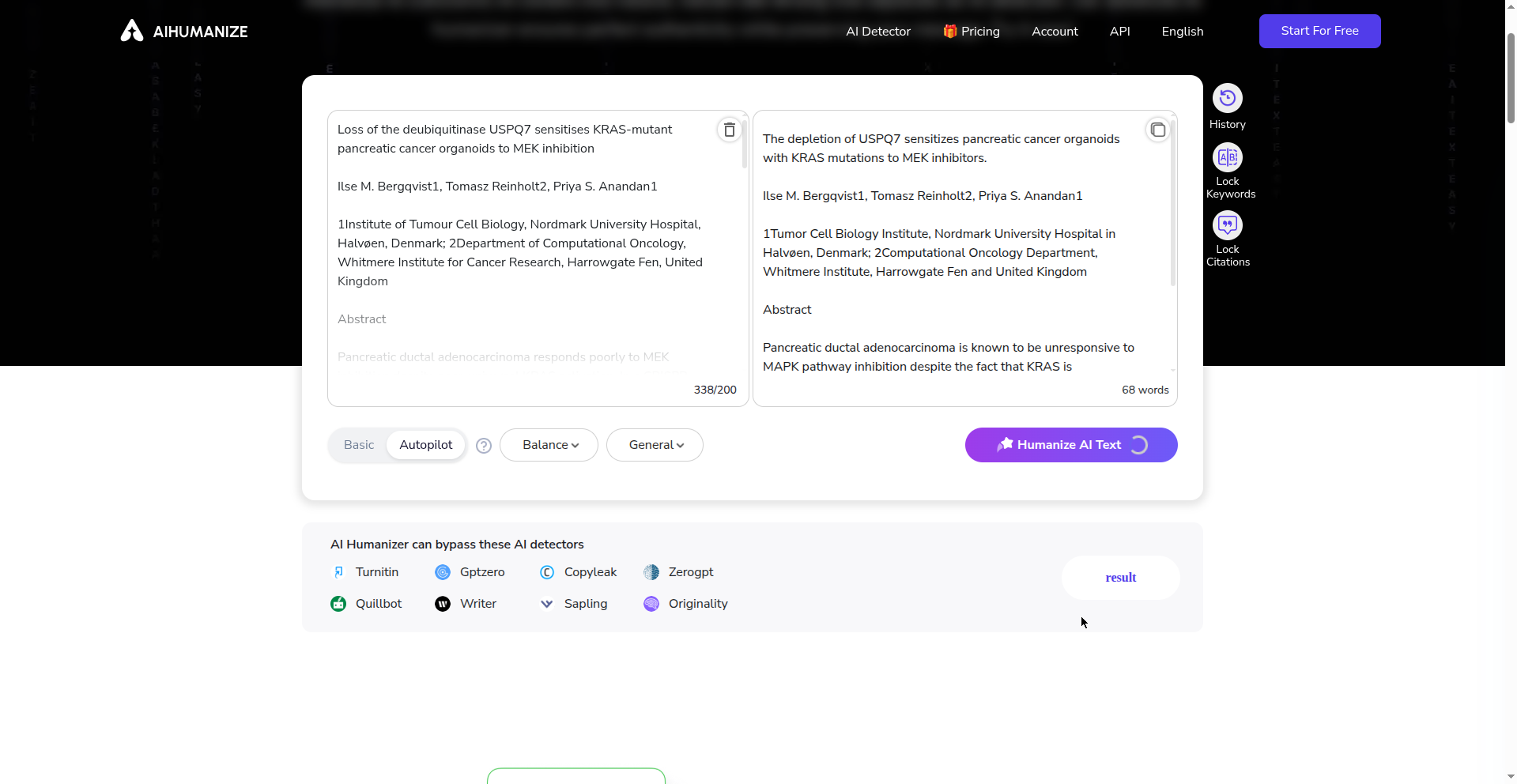
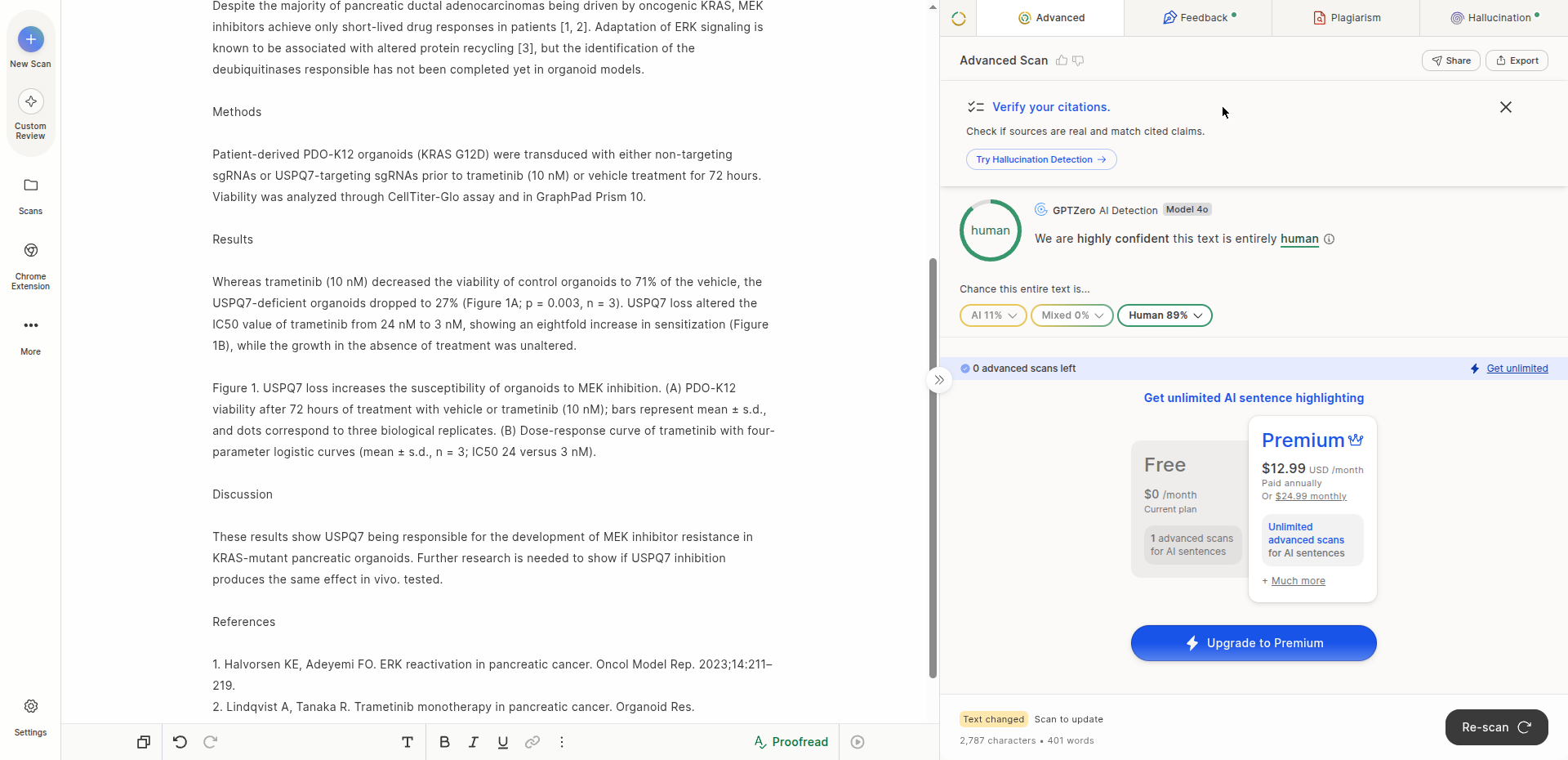
Upon document import, all formatting is stripped and the text is converted into a plain-text browser box. While general meaning was preserved, formatting was destroyed and an artifact ("tested") was erroneously introduced into the Discussion section.
4. ParaphraseText.ai — GPTZero 7% AI
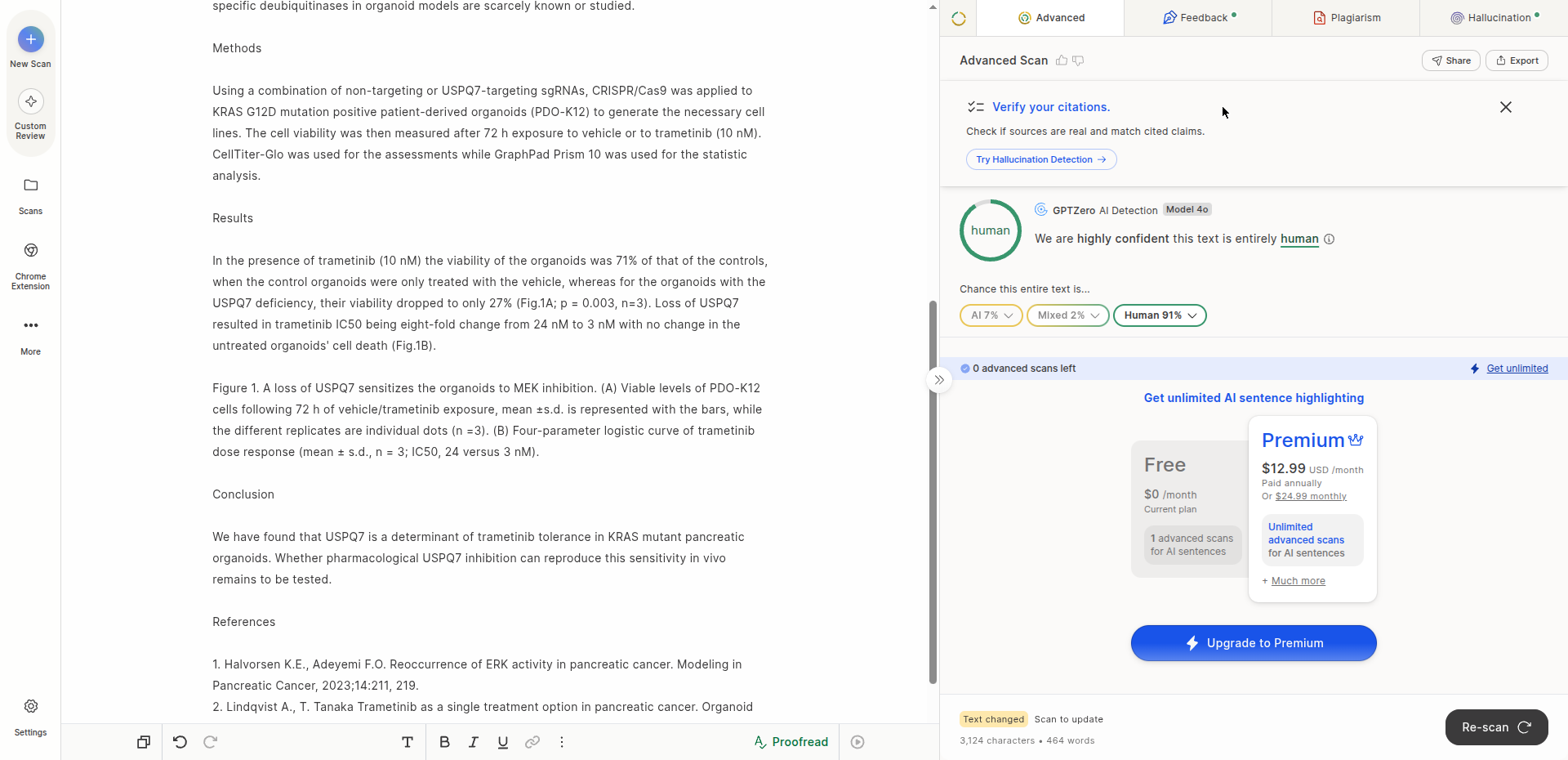
This text-only tool achieved the lowest AI score (7%) and fast processing (19 s), but exhibited severe semantic drift: author names were modified, institutional affiliations were altered, "Discussion" was replaced with "Conclusion", "62%" became "half", and references were hallucinated.
The takeaway
If minimizing an AI detection score is your only goal, all four tools achieve passing scores under 12% on GPTZero. However, academic manuscripts, theses, and essays must survive rigorous peer review and supervisory scrutiny. Here is where the tools diverge:
- Usable Deliverable: Only HumanDoc and BypassDoc.pro return real .docx files. Only HumanDoc provides the full document without mid-sentence truncation or bibliography deletion.
- Reviewability: HumanDoc is the only solution offering native Word tracked changes and yellow semantic-shift alerts, allowing line-by-line editorial control.
- Meaning Consistency: Generic paraphrasers frequently mutate author names, affiliations, numerical findings, and citations. HumanDoc shields these elements completely.
- Fair Pricing: HumanDoc offers pay-as-you-go prepaid bundles that never expire ($5 for 10,000 words), avoiding expensive monthly subscriptions.


